Song catalogue · Instrumental · No sung lyrics
Across the Canyon
Scott Simpson
All songs & lyricsSong information
Release years and genres refer to the catalogued recordings. Composition credits follow Apple Music; separate writer credits follow the supplied lyric sources.
Lyrics
Instrumental · No sung lyrics
Albums & listening
Live, remastered, and alternate arrangements may differ from the supplied lyrics.
- Topo: Acoustic LandscapesInstrumental recordingApple Music · Find on Spotify · Find on Amazon Music
- Being Human (Instrumentals)Instrumental recordingApple Music · Find on Spotify · Find on Amazon Music
- Four RestoredInstrumental recordingApple Music · Find on Spotify · Find on Amazon Music
- Topo Landscapes Vols. I - IV (Remastered)Instrumental recordingApple Music · Find on Spotify · Find on Amazon Music
- Topo Landscapes Volumes V - VIIIInstrumental recordingApple Music · Find on Spotify · Find on Amazon Music
Recording details (11)
Being Human (Instrumentals) · Across the Canyon
Listen on Apple MusicFour Restored · Across the Canyon (Restored)
Listen on Apple MusicTopo Landscapes Vols. I - IV (Remastered) · Across the Canyon
Listen on Apple MusicTopo Landscapes Vols. I - IV (Remastered) · Across the Canyon (Orchestral Arrangement)
Listen on Apple MusicTopo Landscapes Vols. I - IV (Remastered) · Across the Canyon (Bluegrass Arrangement)
Listen on Apple MusicTopo Landscapes Vols. I - IV (Remastered) · Across the Canyon (World Jazz Arrangement)
Listen on Apple MusicTopo Landscapes Volumes V - VIII · Across the Canyon (Ambient Arrangement)
Listen on Apple MusicTopo Landscapes Volumes V - VIII · Across the Canyon (Prog-Rock Arrangement)
Listen on Apple MusicTopo Landscapes Volumes V - VIII · Across the Canyon (Piano Arrangement)
Listen on Apple MusicTopo Landscapes Volumes V - VIII · Across the Canyon (Acoustic Pop Arrangement)
Listen on Apple MusicTopo: Acoustic Landscapes · Across the Canyon
Listen on Apple MusicSong story & origins
Introduction
Across the Canyon appears on Topo: Acoustic Landscapes (2001)—my second album. I had worked on the material in 2000, right after releasing my first CD, Ozzy’s Guitar (2000). Those two projects mark my shift from years of four-track cassette recording (warm, forgiving) to digital album-making on CD (cleaner and far less forgiving). From the start I knew Across the Canyon would anchor the instrumental set: I wanted a record not driven by lyrics but by the place that was shaping us—Spearfish and the rim of Spearfish Canyon, where we lived and wandered.
Where the piece came from
We moved to Spearfish in 1996 and settled in a neighborhood called Mountain Plains 2. With my father-in-law’s help we built a house on Fish Hatchery Loop—for a time the only house on that loop. From our place a narrow path crossed a small road and climbed quickly to what we always called the fire trail: a Forest Service dirt access road tracing the edge of the canyon in case of wildfire. I used to slip up there constantly—sit and read, sit and simply look out across the canyon, or put on headphones and walk the ridge. Those hikes literally shaped the music. I would work on a mix in the studio, export it, head up the trail, and listen while walking to feel whether the arrangement breathed with the landscape—then come home and adjust. It was a double inspiration: the canyon wrote the music, and the music had to hold up out in the canyon.
Composition and arrangement
The piece begins on six-string acoustic guitar with a finger-picking pattern that cycles three, four, maybe five times. As with many of my instrumentals, the arrangement builds in layers and then resolves. The first color that joins is mandolin—strummed, rhythmic, accenting the beat so the acoustic pattern lifts. At that time I was hearing a lot of wooden-flute music during our seasons living and working around Santa Fe, New Mexico, but I didn’t yet own a wooden flute or know where to afford one. What I did have was an Irish penny whistle. If I under-blew it—kept it out of the upper register—I could get a lower, woodier voice. So the “flute” on this track is really that penny whistle, played gently to mimic the tone I was after. Together, the acoustic, mandolin, and under-blown whistle carry the tune from first view on the rim to the song’s settling place.
The trail (then and now)
That fire road wound to a broad open area that, back then, felt wild and unexplored—at least to me. Today that same area is the Aspen Hills housing development, and the fire trail essentially connects Mountain Plains 2 to Aspen Hills. It still walks along the ridge and still gives you those quiet places to take it in (and to pull out a camera if you’re carrying one). The piece remains, for me, a soundtrack to those ridge walks.
Why it stays with me
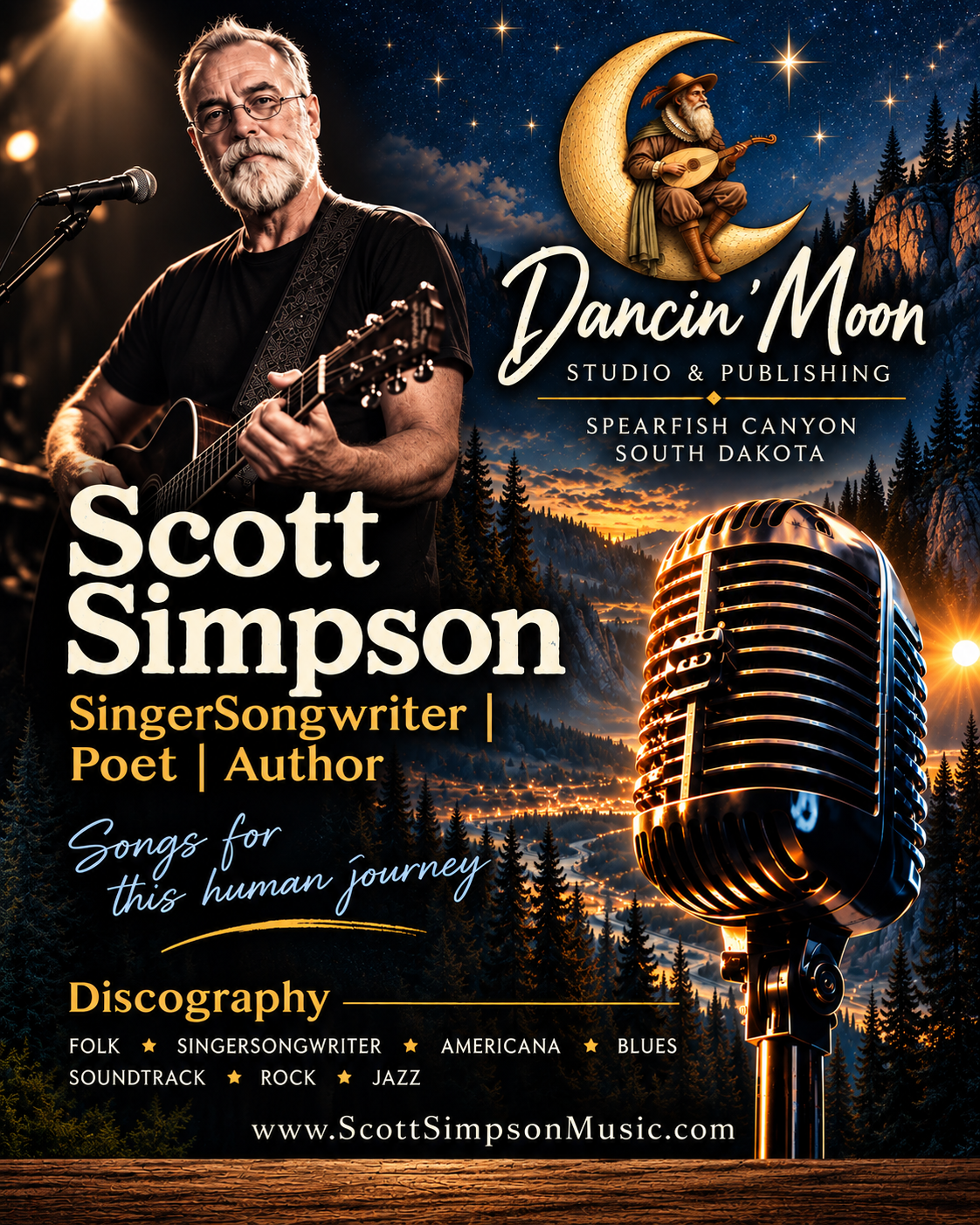
Because it’s the sound of home range—the first Spearfish-inspired composition that I knew belonged on the record, written in the years when I was learning how to let place be the producer. The canyon gave me the tempo and the space; my job was to listen, layer carefully, and let the mix feel right across the canyon as much as it did in Dancin’ Moon back home.
Source: New Music Memoir (1).docx